EMDR Therapy in Seattle
For when you understand what happened—but your body hasn't gotten the message.
Practice details
You've done the work. Your body hasn't caught up.
You can narrate your history with clarity. You understand the patterns, the origins, the reasons. You've spent years in therapy making sense of what happened.
And yet.
The memory still floods you when it surfaces. Your chest tightens in moments that shouldn't be threatening. Your mind goes blank when someone raises their voice. Anxiety spikes and you can't trace it to anything rational. You're exhausted from managing reactions that don't match what you know to be true.
What you're running into is the gap between insight and integration. Understanding what happened is one thing; your nervous system letting go of it is another.
Talk therapy gave you language for your experience. But your nervous system is still responding as if the danger is present. The understanding is real. And it's not enough.
EMDR works differently. It doesn't ask you to narrate the trauma again. It helps your brain finally process what got stuck—so the memory can become memory, not something that keeps happening inside you.
EMDR
EMDR (Eye Movement Desensitization and Reprocessing) is a structured, evidence-based therapy developed specifically for processing memories that still carry emotional charge.
When something overwhelming happens, your brain sometimes can't fully process it. The memory gets stored with all the sensory and emotional intensity of the original moment—the images, the body sensations, the beliefs about yourself that formed in that moment (I'm not safe. It was my fault. I'm broken.).
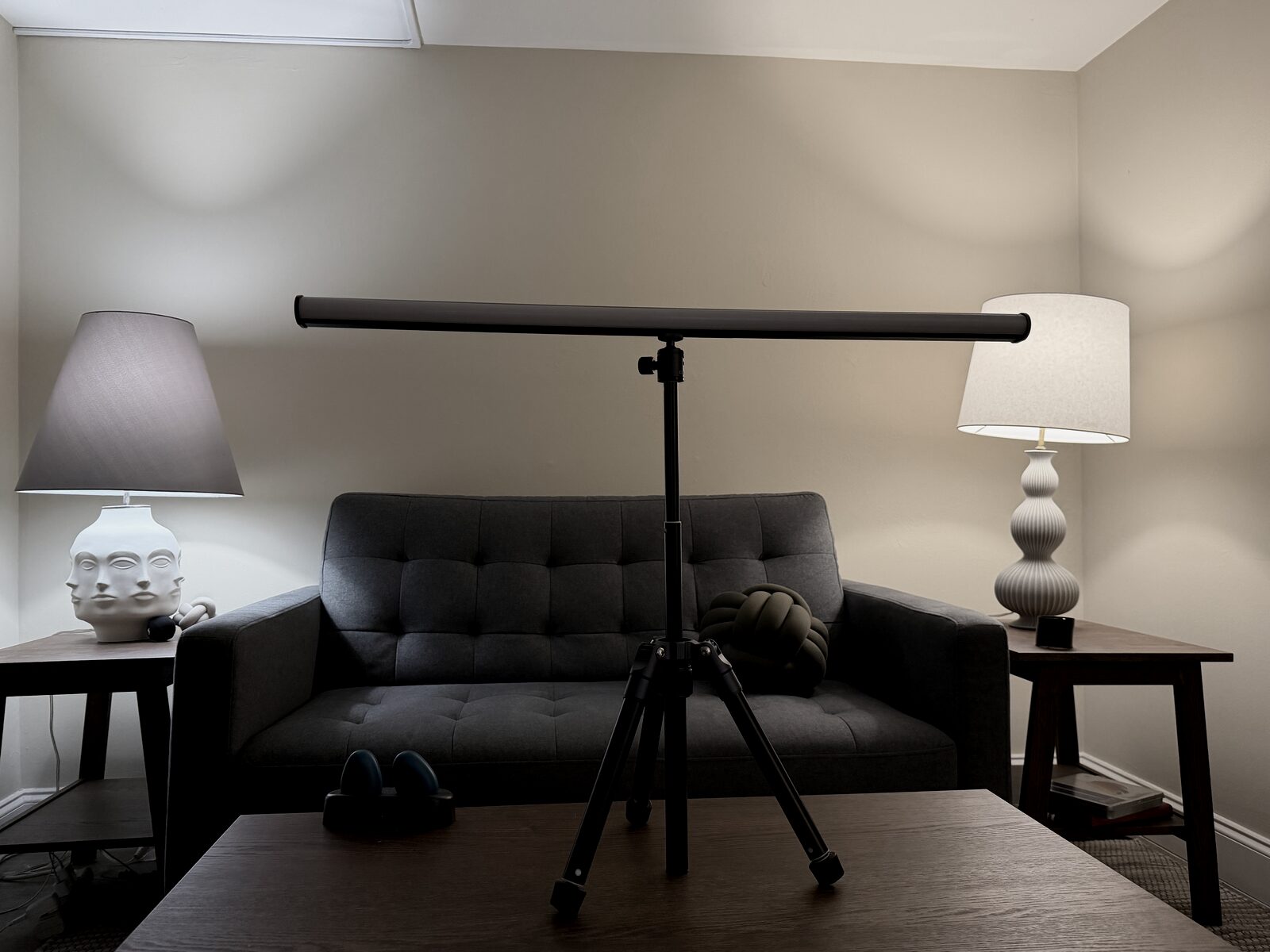
EMDR uses bilateral stimulation—typically eye movements, but sometimes taps or sounds—while you briefly hold the memory in mind. This helps your brain's natural processing system do what it couldn't do at the time: integrate the experience, reduce its emotional charge, and let it become a normal memory rather than a live wire.
You don't have to narrate every detail for this to work. Many clients process material they've never spoken aloud, and the work still moves.
The memory stays. The charge it carries doesn't.
I hold EMDRIA Certification — significantly more than a basic EMDR training; what that requires is covered below. See full credentials →
What EMDR therapy can help with
EMDR was originally developed for PTSD, but research now supports its effectiveness for a wide range of experiences where distressing memories are fueling current symptoms.
Trauma & PTSD — Single-incident trauma (accidents, assaults, witnessing violence), complex trauma and childhood abuse, medical trauma, first responder and workplace trauma. Learn more about my approach to trauma therapy →
Anxiety & Panic — Anxiety rooted in past experiences, panic attacks with identifiable triggers, anticipatory anxiety and dread, social anxiety connected to specific memories of humiliation or rejection.
Depression — When depression is connected to unresolved experiences—loss, failure, rejection, abuse—EMDR can help process what's underneath the persistent low mood.
Grief & Loss — Grief that won't resolve, complicated mourning, loss that carries guilt or unfinished business.
Relationship Patterns — Attachment wounds and relational trauma, betrayal and infidelity, patterns of avoidance, people-pleasing, or emotional shutdown in intimate relationships.
Negative Self-Beliefs — Shame that started somewhere specific, "I'm not good enough" beliefs that persist despite evidence, perfectionism and harsh self-criticism with traceable origins.
Performance & Phobias — Performance anxiety, phobias, test anxiety, public speaking fear, disturbing memories that intrude on daily life.
If there's a memory or set of memories driving your current distress, EMDR may help—even if the experience doesn't seem "traumatic enough" to count.
What EMDR does, and what it doesn't
EMDR doesn't erase the memory. It doesn't change what happened. It doesn't install positive thoughts in place of negative ones, despite how it sometimes gets described. What it does is take a memory that's still being stored as if the threat is current, and let your brain finish processing it — so it gets filed as something that happened, instead of something that's still happening.
What that looks like from the inside varies. A memory you used to flinch away from comes up and there's nothing underneath; the flinch is gone, and you didn't decide to drop it. A trigger you used to brace against arrives and there's a beat where the bracing used to be, long enough to notice you have options. The belief that came out of the original moment — I'm broken, it was my fault, I'm not safe — keeps showing up at first, then shows up less, then one day you notice you haven't run it as the background hum of your day in a while.
The body usually gets there before the language does. Clients often describe noticing it physically first — the shoulders, the chest, the breath that's no longer being held — and only later understanding what's changed about how they're moving through the world.
What EMDR does not do: make you a different person, give you a personality transplant, or guarantee that nothing about the original event ever surfaces again. Anniversaries can still hit. New stressors can stir old material. What changes is your relationship to that material when it shows up, and how long it stays in charge.
The research story underneath this — memory reconsolidation, and what it does and doesn't yet show — is written up in plain language in How Therapy Changes Memory.
EMDRIA Certification
I'm an EMDRIA Certified EMDR Therapist—a credential that requires at least 50 EMDR therapy sessions with 25 or more clients, 20 hours of consultation with an EMDRIA Approved Consultant, and demonstrated competency across the full protocol.
But certification alone isn't what makes EMDR effective. What matters is how it's held.
In my practice, EMDR isn't a standalone technique—it's integrated within a depth-oriented, existential-phenomenological approach to therapy. That means I'm not just running a protocol. I'm tracking how the processing connects to your relationships, your identity, your sense of meaning. When a memory shifts, I help you make sense of what that means for how you live now.
I also bring additional modalities that complement and extend EMDR when needed:
- Flash Technique — A gentle method for reducing the intensity of highly charged memories before EMDR processing. Especially useful when approaching the memory directly feels too overwhelming.
- Brainspotting — A deeper-access modality for trauma stored beneath words. When EMDR hits a wall—when you're too shut down, too numb, or the material is pre-verbal—Brainspotting can reach what EMDR can't. I'm Certified in Brainspotting. Learn more about Brainspotting →
- KA-EMDR (Ketamine-Assisted EMDR) — For clients approved by a medical prescriber, combining low-dose ketamine with EMDR processing for stuck or treatment-resistant material. Learn more about KAP →
- Existential talk therapy — For making sense of what happened and integrating the work into your larger life narrative. Not every session is processing. Some sessions are just conversation—finding meaning, recalibrating, making sense of who you're becoming.
The protocol does the structural work. The clinical judgment is knowing when a protocol-faithful session is what's needed, when the work needs to slow down underneath the protocol, and when something other than EMDR is the right tool for the moment.

How EMDR works in my practice
EMDR has an eight-phase protocol. I run the protocol, including the phases most clinicians compress or skip — Phase 2 stabilization and Phase 6 body scans particularly. The reason isn't dogma; it's that the sequence is what makes the processing hold. Here's what each phase does:
History & Preparation (Phases 1–2)
We start by understanding what brings you to therapy, identifying target memories, and building the internal resources you'll need to process difficult material safely. I don't rush this. Some clients are ready quickly; others need several sessions of stabilization and trust-building first.
Processing (Phases 3–6)
This is the core of EMDR. We identify the target memory (Phase 3), process it with bilateral stimulation (Phase 4), strengthen a new, adaptive belief about yourself (Phase 5), and scan for any residual tension held in the body (Phase 6). You'll notice thoughts, images, body sensations, and emotions shifting as the session progresses. It's not about forcing anything—your brain does the processing. My job is to facilitate, keep you grounded, and track what's emerging.
Closure & Reevaluation (Phases 7–8)
Each session ends with stabilization so you leave grounded (Phase 7). At the next session, we reevaluate what shifted—checking that the memory has lost its charge, that the new belief has taken hold, and addressing related memories that surfaced (Phase 8). And we make meaning of what changed—because lasting change isn't just neurological, it's personal.
Sessions are typically 55 minutes. When a contained piece of EMDR work needs more room, we may schedule a 90-minute session, prorated from the standard session rate.
What EMDR feels like
Clients often describe EMDR as intense but not overwhelming—like finally letting something move through you that's been stuck for years.
You might feel tired after a session. You might notice dreams, new memories surfacing, or emotions shifting over the following days. This is all part of the processing continuing between sessions.
What people tend to notice, when it works: they can think about it without the whole body clenching up. It feels behind them rather than still happening. And they didn't have to narrate every detail for it to move.
Is EMDR right for you?
EMDR might be a good fit if:
- You've done talk therapy and it helped you understand your history, but your body still reacts the same way
- You have specific memories that still carry a charge when you think about them
- Anxiety, depression, or shame seems connected to particular experiences—even if they don't seem "traumatic enough"
- You'd rather not narrate every detail of your experience to process it
- You want a structured method with research behind it that often moves faster than open-ended talk therapy
- You've tried EMDR before with a different therapist and it didn't work (preparation, pacing, and the therapeutic relationship matter enormously)
EMDR might not be the best fit if:
- You're in acute crisis or don't have basic stabilization
- You're looking for open-ended exploration without targeting specific memories
- You're actively using substances in ways that would interfere with processing
If you're not sure, that's something we work out in consultation. And if EMDR isn't the right fit, I offer other trauma processing modalities—Brainspotting, Flash Technique, relational depth work—that may be. Learn more about my approach →
Credentials
- EMDRIA Certified EMDR Therapist — Advanced certification from the EMDR International Association
- EMDRIA Consultant in Training (CIT) — Supervised by Christie Sprowls, PsyD, an EMDR Institute trainer and EMDRIA Approved Consultant
- Licensed Mental Health Counselor (LMHC), Washington State
- Certified in Brainspotting | Flash Technique
- Introduction to Ketamine-Assisted EMDR Therapy
- Teaching Faculty, Seattle University Psychology Department
I also offer EMDR consultation for clinicians working toward EMDRIA Certification.
Common Questions
How many EMDR sessions will I need?
It varies. A single, clearly defined traumatic memory might resolve in 3–6 sessions. Complex trauma with multiple memories and developmental layers often takes longer—sometimes several months of weekly work. Many clients notice shifts after the first few processing sessions: reduced reactivity, better sleep, less intrusive imagery. We'll get a clearer picture as we go.
What if EMDR doesn't work for me?
If EMDR isn't landing, we have options. Flash Technique can reduce intensity before we try again. Brainspotting accesses material differently and works well for some people who don't respond to EMDR. And sometimes what's needed is more relational groundwork before processing. We adjust based on what your system needs.
Can EMDR help with anxiety and depression, not just trauma?
Yes. Anxiety and depression often have roots in specific experiences—even ones that don't seem "traumatic" in the classic sense. If your anxiety has identifiable triggers, or your depression connects to memories of loss, failure, or rejection, EMDR can help process those underlying experiences. You don't need a PTSD diagnosis to benefit from EMDR.
What's the difference between EMDR-trained and EMDRIA Certified?
Many therapists complete a basic EMDR training (usually a weekend or two). EMDRIA Certification requires significantly more: at least 50 EMDR therapy sessions conducted with 25 or more clients, 20 hours of consultation with an EMDRIA Approved Consultant, demonstrated competency across the full protocol, and ongoing continuing education. It indicates a deeper level of experience and skill with the modality. When looking for an EMDR therapist in Seattle, this distinction matters.
What if I've tried EMDR before and it didn't work?
EMDR's effectiveness depends heavily on proper preparation, pacing, and the therapeutic relationship. If previous EMDR felt too fast, too overwhelming, or too mechanical, we can try a different approach—slower pacing, more resourcing, Flash Technique to reduce activation first, or a combination with Brainspotting. The modality itself may not have been the problem.
How is the EMDR page different from the trauma therapy page?
EMDR is a specific method I use. Trauma therapy is the broader clinical work. If you already know you want EMDR, this page is for you. If you're not sure what kind of help you need and you're dealing with the effects of trauma, start with the trauma therapy page →.
Is EMDR therapy covered by insurance in Seattle?
Yes. EMDR is billed as standard psychotherapy and is covered by most insurance plans. I am in-network with several major carriers — the current list is on the rates page. For out-of-network plans I provide superbills, and I work with Thrizer to simplify out-of-network billing.
Can EMDR be combined with ketamine therapy? (KA-EMDR)
Yes. KA-EMDR pairs low-dose ketamine — prescribed and monitored by one of the prescribers I work with — with standard EMDR processing. The clinical rationale is that at low doses many people can stay with material that's usually too activating to approach: dissociation, shutdown, hypervigilance. That's a clinical observation with a small research literature behind it, not an established mechanism. I provide the EMDR work; whether it fits is decided with you and your prescriber. See the KAP page for medical contraindications and clinical-fit considerations.
Will I have to relive the trauma to process it?
This is the most common fear about EMDR—and the answer is no, not in the way you're imagining. EMDR doesn't require detailed narration or extended exposure to traumatic imagery. Most clients describe the activation during processing as manageable—closer to watching a scene from a distance than being trapped in it again. You share only as much as feels necessary; some clients give me a brief headline and we work from there. We build stabilization skills, calming imagery, and body grounding before any reprocessing begins. If activation becomes overwhelming, we pause and resource. You stay in control.
Does EMDR work for childhood trauma or complex PTSD?
Yes, but the pacing is different. Single-incident adult trauma (an accident, an assault) often resolves in 3–6 EMDR processing sessions because there's a clear memory to target. Complex PTSD and childhood trauma involve many memories layered over years of development—what shows up isn't a "memory" exactly but a relational pattern, a body state, an identity formed in survival. EMDR works for this, but requires more extensive preparation, slower pacing, more resourcing, and often integration with Brainspotting, parts work, or somatic approaches. We don't rush. The timeline is measured in months rather than sessions.
How I think about this work → Approach
I'm not taking new clients right now. If you're searching, the availability page lists good places to start →